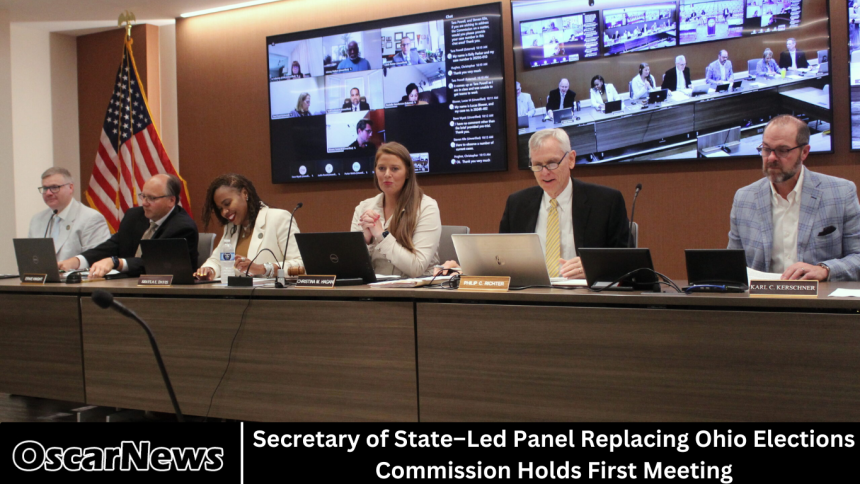
Ohio election oversight entered a new phase as a secretary of state–led panel convened its first official meeting, marking a major structural change in how campaign finance and election law enforcement functions across the state.
The newly formed panel officially replaces the Ohio Elections Commission, an entity that operated for decades as an independent body responsible for adjudicating election-related complaints. The inaugural meeting signaled more than a procedural milestone.
It represented a shift in authority, governance philosophy, and administrative oversight that continues to generate attention among lawmakers, election advocates, watchdog organizations, and political campaigns statewide.
Transition From Ohio Elections Commission Marks Structural Shift
For years, the Ohio Elections Commission served as the central body handling allegations involving campaign finance violations, election misconduct, and political advertising disputes. The commission functioned independently, with members appointed through a bipartisan process designed to reduce political influence.
Recent legislative changes dismantled that structure. Lawmakers approved a plan transferring enforcement responsibilities to a panel operating within the Secretary of State’s office. Supporters described the move as modernization. Critics described it as a consolidation of power.
More Read: Setting Aside Political Divides Is Essential to Maryland’s Future
Purpose And Authority Of The New Panel
The Secretary of state–led panel now holds responsibility for:
- Reviewing campaign finance complaints
- Investigating alleged election law violations
- Issuing rulings or recommendations
- Referring cases for further legal action when necessary
Unlike the former commission, the panel operates under direct administrative supervision of the Secretary of State. Supporters argue that this model improves efficiency, accountability, and coordination across election systems.
Opponents raise concerns about independence, transparency, and partisan pressure.
First Meeting Sets Operational Tone
During the initial meeting, panel members focused primarily on organizational matters rather than enforcement decisions. Agenda items included:
- Adoption of procedural rules
- Discussion of case intake processes
- Clarification of panel authority limits
- Scheduling future meetings
Officials emphasized continuity, noting that existing complaints pending under the former commission would not disappear. Instead, cases will transition into the new system for review.
No major enforcement rulings occurred during the meeting, though members acknowledged a backlog of complaints awaiting evaluation.
Secretary Of State Role Expands Under New System
The restructuring significantly expands the secretary of state’s influence over election enforcement. The office already oversees:
- Voter registration systems
- Election administration
- Ballot certification
- County board coordination
With the new panel in place, enforcement authority now falls closer to election administration than before.
The secretary of state’s office maintains that safeguards exist to prevent political interference, including ethics rules, public meeting requirements, and judicial review options.
Legislative Background Behind The Change
State lawmakers approved the restructuring through budget legislation, rather than a standalone bill focused solely on election oversight. That approach drew criticism from advocacy groups who argued the change lacked sufficient public debate.
Proponents cited several justifications:
- Faster complaint resolution
- Reduced operational costs
- Streamlined bureaucracy
- Improved alignment with election administration
Opponents countered that the Ohio Elections Commission already provided due process and independence, qualities difficult to replicate under executive oversight.
Reaction From Election Integrity Advocates
Reaction to the first meeting reflected ongoing division.
Election integrity groups expressed concern about impartiality, arguing that enforcement functions should remain insulated from partisan officials. Several organizations stated that public trust depends on visible independence.
Other groups welcomed the change, stating that prior enforcement processes moved too slowly and lacked consistent outcomes.
County election officials largely adopted a wait-and-see posture, focusing on how new procedures might affect local operations.
Transparency And Public Access Considerations
One central question surrounding the new panel involves transparency. The Ohio Elections Commission previously operated through publicly noticed hearings, published decisions, and accessible complaint records.
During the first meeting, panel members confirmed that meetings will remain open to the public, with records subject to public disclosure laws.
However, critics note that internal review processes may shift behind closed doors before public action occurs, potentially reducing visibility.
Legal Oversight And Appeal Options Remain
Despite structural changes, legal safeguards remain intact. Parties subject to enforcement actions retain access to judicial review through Ohio courts.
Legal analysts note that any abuse of authority or improper influence could face constitutional challenges, particularly if enforcement appears selective or politically motivated.
The first meeting did not involve contentious votes, reducing immediate legal tension.
Impact On Campaigns And Political Organizations
Political campaigns, political action committees, and advocacy organizations closely monitor enforcement changes. Campaign finance compliance already requires careful reporting, documentation, and timing.
The new panel’s approach could influence:
- Complaint filing strategies
- Enforcement timelines
- Settlement negotiations
- Risk assessments for political messaging
Campaign attorneys advise clients to continue strict compliance while observing early rulings for enforcement patterns.
Historical Context Of Ohio Election Oversight
Ohio election oversight has evolved through multiple reforms over decades, often responding to national controversies, court rulings, or federal mandates.
The Ohio Elections Commission emerged as part of earlier reform efforts emphasizing independence. The new panel reflects a more centralized model, aligning enforcement within administrative authority.
Political scientists note that both models exist nationwide, with varying outcomes depending on transparency and leadership practices.
Questions Raised During The First Meeting
Although the meeting remained procedural, several underlying questions emerged:
- How will panel members handle conflicts involving the Secretary of State’s office?
- What standards guide enforcement discretion?
- How quickly will cases move compared to prior timelines?
- Will penalties remain consistent with past precedent?
Panel leadership promised future clarification through published guidelines.
Comparison With Other States
Several states house election enforcement within executive offices, while others maintain independent commissions. Studies show mixed results regarding efficiency and public trust.
States with strong transparency rules tend to maintain credibility regardless of structure. States lacking oversight mechanisms often face litigation or federal scrutiny.
Ohio’s approach now places greater emphasis on leadership accountability rather than structural separation.
Media Coverage And Public Awareness
Media coverage of the first meeting remained moderate, reflecting the procedural nature of the session. Coverage may increase once the panel issues substantive rulings or controversial decisions.
Public awareness remains limited outside political and legal circles. Analysts suggest that enforcement visibility will shape public perception more than structural debate alone.
Future Meetings Expected To Address Substantive Cases
Upcoming meetings will likely address inherited complaints from the former commission. Observers expect early rulings to establish enforcement tone and precedent.
Key indicators include:
- Speed of the f resolution
- Penalty consistency
- Public explanation of decisions
- Willingness to dismiss weak complaints
Early patterns could influence confidence among voters and political participants.
Broader Implications For Election Confidence
Election oversight plays a critical role in public trust. Even administrative changes can influence perception, particularly during high-stakes election cycles.
Supporters of the new system argue that accountability improves when authority aligns clearly with elected officials. Critics argue that independence remains essential during polarized political climates.
The first meeting did little to resolve those philosophical differences but confirmed that the new system now operates fully.
Frequently Asked Question
What is the Secretary of State–led panel?
A newly created oversight body operating within the Ohio Secretary of State’s office that now handles election law and campaign finance complaints.
Why was the Ohio Elections Commission replaced?
State lawmakers approved changes shifting enforcement duties to the secretary of state’s office to streamline operations and reduce administrative delays.
What happened during the panel’s first meeting?
Members adopted procedural rules, discussed case transitions, and outlined how complaints will be reviewed under the new system.
Does the new panel handle existing complaints?
Yes. Complaints previously filed with the Ohio Elections Commission will transfer to the new panel for continued review.
Who oversees the new panel?
The panel operates under the administrative authority of the Ohio Secretary of State.
Are the panel’s meetings open to the public?
Yes. Meetings remain subject to public notice and open meeting requirements under Ohio law.
How could this change affect future elections?
The new structure may influence how quickly complaints are resolved and how election laws are enforced statewide.
Conclusion
The secretary of state–led panel replacing the Ohio Elections Commission officially began work with a meeting focused on structure, rules, and transition planning. While no major enforcement actions occurred, the meeting marked a significant moment in Ohio election oversight history.
Future decisions will determine whether the new model delivers efficiency without sacrificing independence. For now, Ohio enters a new chapter where election enforcement authority operates closer than ever to election administration itself.
Stakeholders across the political spectrum will continue watching closely as the panel moves from organization to action.