


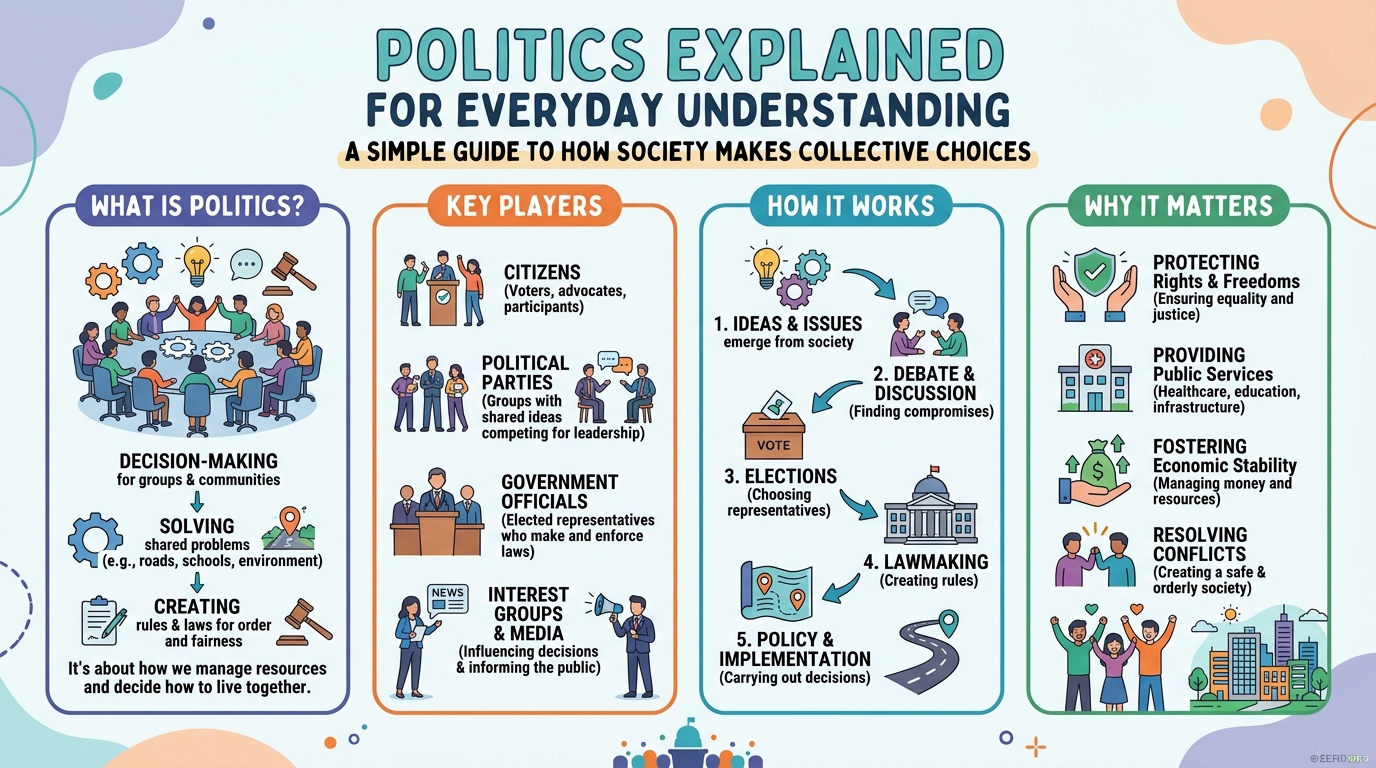
Politics plays a major role in shaping daily life, from the laws we follow to the services we use, yet many people find it complicated or distant. In reality, politics is simply the process of how decisions are made in a country or community. Understanding it in simple terms helps people become more informed citizens and make better choices about leadership and policies that affect their future.
Basic Concepts of Politics
What Politics Actually Means
Politics refers to the system through which decisions are made in a society or country. It includes laws, governance, leadership, and public policies. In simple terms, politics is about who gets what, when, and how in a community or nation.
Role of Government
The government is responsible for making and enforcing laws, maintaining order, and providing public services. It acts as the central authority that ensures society functions smoothly and fairly for all citizens.
Power and Authority
Power in politics refers to the ability to influence decisions, while authority is the legal right to make those decisions. Understanding this difference helps explain how leaders and institutions operate within a political system.
Laws and Policies
Laws are rules created by governments that everyone must follow. Policies are plans or actions designed to solve public issues. Together, they shape how society is managed and regulated.
Political Ideologies
Political ideologies are belief systems that guide how governments should work. Examples include democracy, socialism, and conservatism, each offering different views on freedom, equality, and economic management.
Types of Political Systems
Democracy System
In a democracy, citizens have the power to choose their leaders through voting. This system promotes freedom of speech, equal rights, and participation in decision-making.
Authoritarian System
An authoritarian system is where power is concentrated in the hands of a leader or small group. Citizens have limited political freedom and decision-making influence.
Monarchy System
A monarchy is a system where a king or queen rules the country, either with absolute or limited powers depending on the structure of governance.
Republic System
In a republic, the country is considered a public matter, and leaders are elected to represent citizens. Laws are created through elected representatives.
Hybrid Systems
Some countries use a mix of different political systems, combining democratic and authoritarian elements depending on their governance structure.
How Governments Make Decisions
Policy Formation Process
Governments create policies by identifying problems, researching solutions, and implementing laws to address public needs effectively.
Role of Political Leaders
Political leaders represent the public and make decisions on their behalf. They play a key role in shaping national development and policies.
Legislative System Function
Legislatures are bodies that debate and pass laws. They ensure that decisions are made through discussion and majority agreement.
Executive Decision Making
The executive branch is responsible for implementing laws and managing government operations efficiently.
Judicial System Role
The judiciary interprets laws and ensures justice is served fairly, protecting citizens’ rights and maintaining balance in governance.
Political Parties and Elections
Purpose of Political Parties
Political parties represent different ideologies and policies. They compete in elections to gain power and implement their agendas.
Election Process Overview
Elections allow citizens to choose their leaders through voting, ensuring democratic participation in governance.
Campaign Strategies
Political campaigns are used to promote candidates and their ideas through media, speeches, and public engagement.
Voter Participation Importance
Voter participation is essential for a strong democracy, as it reflects public opinion and ensures fair representation.
Coalition Governments
Coalition governments are formed when multiple parties work together to create a majority and govern collectively.
Global Politics and Relations
International Relations Basics
Countries interact through diplomacy, trade, and agreements to maintain peace and cooperation globally.
Role of International Organizations
Organizations like the United Nations help resolve conflicts, promote peace, and support global development.
Trade and Economic Policies
Countries create trade agreements to strengthen economies and improve international cooperation.
Conflict and Peace Efforts
Global politics also involves resolving conflicts through negotiation and diplomatic efforts instead of war.
Foreign Policy Decisions
Foreign policy defines how a country interacts with other nations in political, economic, and security matters.
Media and Politics
Role of News Media
Media informs the public about political events, government actions, and policy changes.
Social Media Influence
Social media platforms like Facebook and X shape political opinions and public discussions.
Public Opinion Formation
Public opinion is shaped by media, education, and personal beliefs, influencing political decisions and elections.
Political Debates Coverage
Debates allow candidates to present ideas and policies, helping voters make informed decisions.
Misinformation Challenges
False information can mislead the public and affect political stability, making media literacy very important.
Importance of Political Awareness
Understanding Rights
Political awareness helps citizens understand their rights and responsibilities within a country.
Active Citizenship
Active citizens participate in voting, discussions, and community decisions to improve governance.
Accountability of Leaders
Awareness ensures leaders are held accountable for their actions and decisions.
Social Development Impact
Politics directly influences education, healthcare, and infrastructure development in society.
Civic Engagement Benefits
Engaging in politics helps build stronger, more informed, and more responsible communities.
Conclusion
Politics may seem complex, but at its core it is about how decisions are made that affect everyday life. From government systems to elections and global relations, understanding politics helps people become more aware and active citizens. Informed participation strengthens democracy and ensures better leadership and development for society as a whole.
