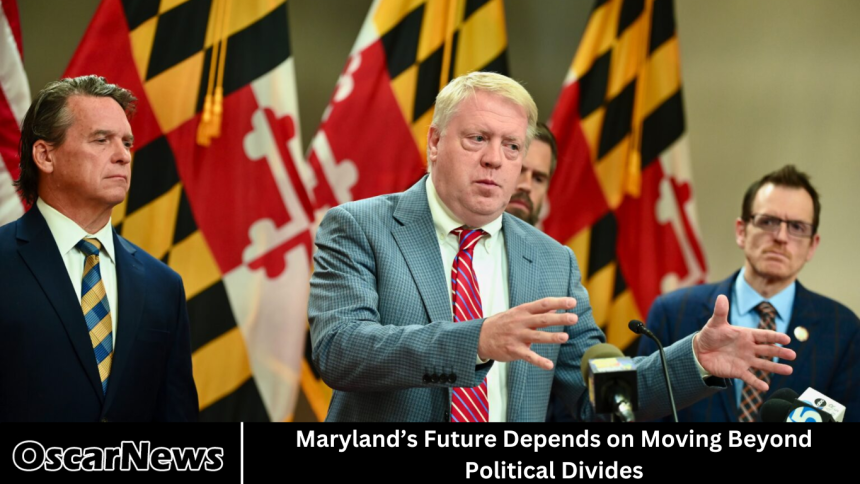
Maryland stands at a crossroads. The state’s economy, education system, public safety, and infrastructure all show promise. Yet political divisions keep Maryland from reaching its full potential. The future of Maryland depends on leaders and citizens choosing unity over division, collaboration over conflict, and solutions over slogans.
When politics becomes a contest of identity rather than a conversation about results, the people lose. Maryland’s challenges are too complex to solve through partisan arguments. The state needs a new kind of leadership—one that focuses on outcomes, not on winning political battles.
The Cost of Division
Political division doesn’t just create noise. It slows progress, fuels distrust, and wastes resources. When lawmakers focus on defeating opponents rather than improving lives, budgets become battlegrounds, not tools for progress.
In Maryland, division appears in multiple areas:
More Read: Trump’s Venezuela Talks with Oil Chiefs Turn to Greenland and Iran – Live Report
1. Budget Gridlock
When political parties refuse to compromise, budgets stall. Funding for schools, transportation, and public safety becomes uncertain. The result: delayed projects, rising costs, and communities left behind.
2. Education Under Pressure
Maryland has some of the strongest schools in the nation, yet persistent gaps remain. Division prevents focused reform and blocks efforts to improve outcomes for all students. When education becomes political theater, students lose.
3. Public Safety Challenges
Crime and safety are not partisan issues. Yet political divides often create conflicting policies and inconsistent enforcement. Maryland needs unified, practical approaches that protect residents while addressing root causes.
4. Economic Inequality
Maryland has significant wealth, yet poverty and inequality remain persistent. Political conflict distracts from solutions like workforce training, affordable housing, and economic opportunity in underserved communities.
The real cost of division is not measured in political victories. It is measured in missed opportunities, stalled progress, and lives affected by broken systems.
Why Unity Matters for Maryland’s Future
Maryland’s future depends on unity because the state’s challenges are interconnected. Housing, education, health care, public safety, and economic opportunity all impact each other. To succeed, Maryland must adopt a shared vision.
Here’s what unity can accomplish:
1. Stronger Economic Growth
Businesses thrive when policies are stable and predictable. When political parties cooperate, Maryland can build stronger infrastructure, improve workforce training, and attract investment. Unity creates confidence.
2. Better Education Outcomes
Schools need consistent funding and policies that support students, teachers, and families. When political division decreases, education reform can focus on real outcomes rather than political messaging.
3. Improved Public Safety
Safety improves when communities, law enforcement, and local government work together. Unity supports prevention, intervention, and enforcement strategies that protect citizens and reduce crime.
4. Healthier Communities
Access to health care, mental health support, and addiction services improves when the political focus shifts from blame to solutions. Unity makes community health a shared responsibility.
5. Stronger Community Trust
Political division erodes trust. Unity rebuilds trust by showing citizens that leaders can collaborate, deliver results, and act with integrity.
Maryland’s future depends on this kind of collaboration.
What Causes Political Division in Maryland?
To move beyond division, Maryland must first understand its roots. Political division often grows from:
1. Identity Politics
When politics becomes a matter of personal identity, disagreement turns into conflict. People stop listening and start defending. Maryland needs a culture where disagreement is respectful and constructive.
2. Media Echo Chambers
Social media and partisan news outlets often reinforce existing beliefs. People become trapped in a cycle of outrage and confirmation bias. Maryland must encourage media literacy and civic dialogue.
3. Political Incentives
Elected officials often gain support by appealing to base voters rather than seeking compromise. The system rewards conflict. Maryland must change incentives to reward collaboration and results.
4. Lack of Civic Engagement
When people stop participating in civic life, political power becomes concentrated. Citizens must engage in local government, attend meetings, vote, and hold leaders accountable.
Division thrives when people feel powerless. Unity grows when citizens participate.
How Maryland Can Move Beyond Political Divides
Moving beyond division is not easy. It requires intentional actions by leaders and citizens. Here are practical steps Maryland can take:
1. Promote Civic Education
Civic education builds understanding. Schools, community centers, and local organizations can teach students and adults how government works, why compromise matters, and how to engage respectfully.
2. Encourage Cross-Party Collaboration
Leaders must model collaboration. Bipartisan working groups can tackle issues like housing, transportation, and education. When leaders cooperate, citizens follow.
3. Focus on Local Solutions
Many of Maryland’s most urgent issues are local. County and city governments can lead the way in addressing crime, housing, and education. Local solutions often succeed because they reflect community needs.
4. Strengthen Community Programs
Community programs that support families, youth, and vulnerable populations reduce pressure on public systems. When communities feel supported, division decreases.
5. Prioritize Transparency and Accountability
Trust grows when leaders are transparent. Clear communication, open meetings, and measurable goals build confidence. Maryland needs leaders who show results and accept responsibility.
6. Support Workforce Development
Economic opportunity reduces social conflict. Workforce training, apprenticeships, and career pathways help residents succeed. Maryland can become a national leader in workforce development.
7. Invest in Infrastructure
Infrastructure supports economic growth and quality of life. Transportation, broadband access, and modern public facilities help communities thrive. Infrastructure investment requires long-term planning and bipartisan support.
8. Reform Campaign Finance
Money in politics can fuel division. Campaign finance reform can reduce the influence of special interests and promote voter trust. Maryland can lead the way by supporting transparency and accountability.
Stories of Unity in Maryland
Despite political conflict, Maryland has examples of unity. Communities have come together to support education, improve neighborhoods, and build stronger local economies.
Here are a few examples:
Community Schools
Some Maryland schools operate as community hubs, offering health services, after-school programs, and family support. These schools show how communities can collaborate across political lines to support students.
Local Economic Partnerships
Local businesses, nonprofits, and government agencies have partnered to create job training programs. These partnerships build real opportunity without political conflict.
Public Safety Initiatives
Several Maryland communities have adopted community policing, intervention programs, and mental health support to reduce crime. These programs show that safety improves when communities work together.
These stories show what Maryland can achieve when political division takes a back seat.
The Role of Maryland’s Leaders
Leaders shape culture. Maryland’s leaders must choose unity and action over division and rhetoric. Leadership means listening, learning, and taking responsibility.
What Leaders Can Do:
-
Set a tone of respect and collaboration.
-
Prioritize policies with measurable results.
-
Speak clearly about shared goals.
-
Work across parties to solve problems.
-
Encourage citizen participation.
-
Lead with honesty and integrity.
Leadership is not about winning arguments. It is about improving lives.
The Role of Maryland’s Citizens
Citizens hold power. Maryland residents can shape the future by participating, voting, and engaging respectfully. Here’s how citizens can help:
Attend Town Hall Meetings
Listening to leaders and asking questions builds accountability.
Vote with Purpose
Voting matters. Maryland citizens should support leaders who prioritize solutions over division.
Engage in Community Service
Volunteering strengthens neighborhoods and builds trust.
Support Local Businesses
Local economic strength supports community stability.
Respect Differences
People can disagree without becoming enemies. Respect builds unity.
When citizens participate, political division loses power.
What Maryland’s Future Could Look Like
Imagine a Maryland where:
-
Schools are funded fairly and students succeed.
-
Jobs grow in every community.
-
Public safety improves through prevention and support.
-
Transportation and infrastructure connect communities.
-
Health care and mental health services are accessible.
-
Government works efficiently and transparently.
-
Citizens feel heard and represented.
This future is possible if Maryland moves beyond political division. It requires courage, patience, and commitment. But it is achievable.
Frequently Asked Question
Why does Maryland’s future depend on reducing political division?
Division slows progress, blocks policy solutions, and prevents collaboration on critical issues like education, safety, and infrastructure.
What issues are most affected by political divides in Maryland?
Key areas include education funding, public safety strategies, housing affordability, transportation planning, and economic growth.
How does political division impact Maryland’s economy?
Division creates uncertainty, delays projects, and reduces business confidence, making it harder to attract investment and create jobs.
Can bipartisan leadership improve Maryland’s future?
Yes. Bipartisan leadership encourages compromise, focuses on outcomes, and builds trust in government.
What role do citizens play in overcoming political division?
Citizens can vote, attend local meetings, support community programs, and engage in respectful dialogue to encourage unity.
What steps can Maryland take to reduce political conflict?
Maryland can strengthen civic education, encourage cross-party collaboration, support local solutions, and prioritize transparency in government.
What would a united Maryland look like?
A united Maryland would have stronger schools, safer communities, better infrastructure, fairer economic opportunities, and a government that delivers results for all residents.
Conclusion
Maryland’s future depends on moving beyond political divides. Division slows progress, fuels distrust, and blocks solutions. Unity creates strength, stability, and opportunity. Maryland has the talent, resources, and potential to lead. But the state must choose collaboration over conflict, results over rhetoric, and unity over division.
The future of Maryland is not determined by political parties. It is determined by people who believe that together, the state can build a stronger, more prosperous future for everyone.