
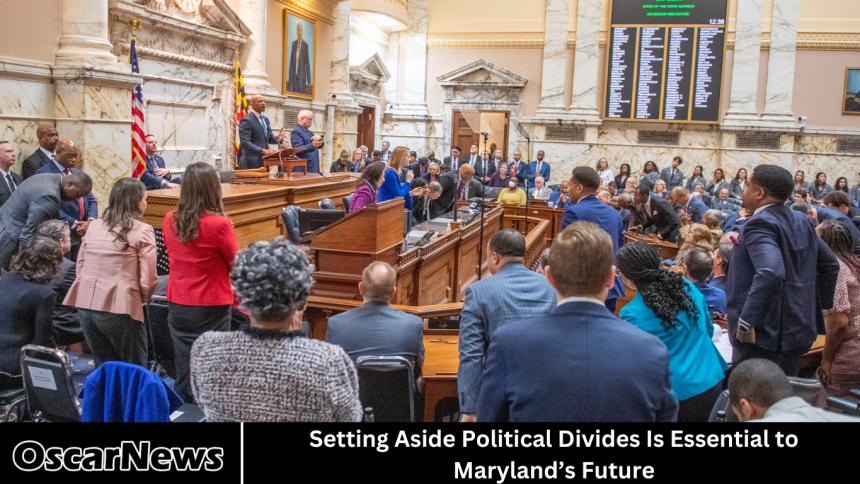
Maryland stands at a turning point. Communities stretch from the Appalachian mountains through Chesapeake Bay shores toward busy urban centers. Each region carries a unique history, culture, and economic need.
Political division threatens shared progress. Future success depends on unity, cooperation, and common purpose. Growth, innovation, and resilience emerge when people focus on shared goals rather than party labels.
Maryland identity beyond party lines
Maryland history reflects balance. Border state roots shapeda culture built around dialogue, compromise, and adaptation. Agriculture, maritime trade, research, healthcare, and education shaped the economy. Political disagreement always existed, yet collaboration fueled advancement. Today, polarization disrupts that tradition. Restoring the cooperative spirit strengthens civic life.
Residents share more values than headlines suggest: safe neighborhoods, strong schools, affordable housing, and reliable infrastructure matter across counties. Families want opportunity, stability, dignity. Workers want fair wages and thriving industries. Businesses seek predictable policies and a skilled workforce. These shared priorities form the foundation for unity.
More Read: Maryland’s Future Depends on Moving Beyond Political Divides
Economic strength through collaboration
Economic growth thrives within stable, cooperative environments. Maryland hosts federal agencies, biotech hubs, ports, universities, and defense contractors. These sectors require bipartisan support. Investment decisions rely on long-term planning. Political gridlock discourages expansion, innovation, and job creation.
Small businesses form the backbone of towns. Entrepreneurs need streamlined regulations, access to capital, and workforce training. Political battles delay policy improvements. When leaders collaborate, resources flow efficiently. Tax structures improve. Infrastructure projects move forward. Workforce programs align with industry needs.
Rural counties face different challenges than metropolitan areas. Agriculture sustainability, broadband access, and healthcare access require tailored solutions. Urban centers focus on transit, housing density, and public safety. Collaboration allows statewide strategies respecting regional needs. Divisive politics ignore nuance, stall progress.
Education as a unifying force
Education shapes the future workforce, civic engagement, and social mobility. Maryland schools rank among national leaders, yet gaps persist. Funding equity, teacher support, and curriculum relevance demand cooperation. Political disputes distract from student outcomes.
Parents across the spectrum want quality education. Teachers seek respect, resources, and professional growth. Students deserve safe classrooms, modern tools, and pathways toward careers. Bipartisan collaboration strengthens education systems. Investment decisions grounded within evidence rather than ideology deliver lasting results.
Higher education drives research, innovation, and entrepreneurship. Universities attract talent worldwide. Stable funding, academic freedom, and industry partnerships depend on cooperative governance. Political hostility threatens research grants, international collaboration, and student recruitment.
Infrastructure unites communities
Roads, bridges, and transit systems connect people, markets, and opportunities. Maryland’s infrastructure ages. Traffic congestion affects productivity and quality of life. Climate change increases flooding risks and coastal erosion. Infrastructure solutions require long-term commitment beyond election cycles.
Transportation projects often stall amid partisan disputes. Delays raise costs, frustrate residents. Collaborative planning accelerates progress. Modern transit reduces emissions, improves mobility, and supports economic growth. Broadband expansion connects rural communities, supports telehealth, remote work, and education.
Energy infrastructure also demands unity. Renewable energy development, grid modernization, resilience planning, support environmental goals, and job creation. Balanced policies encourage innovation while protecting consumers.
Environmental stewardship as shared responsibility
Chesapeake Bay represents MMaryland’sheart. Fishing, tourism, recreation, and heritage depend on bay health. Environmental protection transcends party boundaries. Farmers, watermen, and urban residents all benefit from clean water and healthy ecosystems.
Climate change presents real risks. Rising seas threaten coastal towns. Extreme weather impacts agriculture, infrastructure, and public health. Addressing these challenges requires science-based policy, regional cooperation, and sustained investment. Political division undermines preparedness.
Collaborative environmental strategies create jobs within renewable energy, conservation, and restoration. Workforce training prepares residents for green economy roles. Economic growth aligns with environmental protection through smart policy.
Public health requires unity.
Public health crises reveal the importance of cooperation. Access to healthcare, mental health services, and substance abuse treatment affects every community. Political polarization complicates the response. Evidence-based policy saves lives.
Maryland’s healthcare sector leads nationally. Hospitals, research institutions, and biotech companies depend on coordinated policy. Workforce shortages require training programs, immigration solutions, and licensing reforms. Collaboration ensures resilient healthcare systems.
Preventive care and community health initiatives reduce costs and improve outcomes. Cross-sector partnerships between government, nonprofits, private sector deliver effective solutions. Partisan conflict hinders funding, coordinatiand and trust.
Public safety through partnership
Safe communities represent a universal goal. Crime reduction relies on trust between residents, law enforcemeand and nt, social services. Ideological extremes oversimplify complex issues. Collaborative approaches integrate prevention, accountability, and rehabilitation.
Data-driven policing, community engagement, and mental health response teams improve outcomes. Investment within youth programs, educatiand on, and employment reduces crime long-term. Political unity supports balanced reforms.
Judicial system effectiveness also depends on cooperation. Court funding, legal aand and id, rehabilitation programs require bipartisan support. Fair justice systems strengthen social stability and economic growth.
Civic engagement and trust
Democracy thrives when citizens trust institutions. Political divisiveness erodes confidence. Misinformation spreads. Voter cynicism rises. Restoring trust requires transparent governance, respectful dialogue, and ue, inclusive decision-making.
Community forums, town hall, and ls, participatory budgeting encourage engagement. Leaders listening across differences build credibility. Media literacy education counters misinformation. Civic education fosters informed participation.
Local governments often demonstrate collaboration success. Municipal leaders work pragmatically on issues like zoning, public works, and emergency response. Scaling that spirit statewide strengthens democracy.
Business confidence and investment
Investors value stability. Companies consider the regulatory environment, workforce qualiand ty, and infrastructure reliability. Political dysfunction signals risk. Cooperative governance attracts capital and talent.
Maryland competes with neighboring states for business growth. Streamlined permitting, predictable tax policy, and supportive innovation ecosystems matter. Bipartisan economic strategies create confidence.
Public-private partnerships deliver infrastructure, research commercializatiand and on, workforce development. Collaboration maximizes resources and accelerates outcomes.
Innovation through diverse perspectives
Innovation thrives on diverse ideas. Political diversity can strengthen problem-solving when managed respectfully. Polarization silences voices, limits creativity. Inclusive dialogue fosters better solutions.
Maryland innovation clusters benefit from collaboration across academia, government, and industry. Research breakthroughs emerge from interdisciplinary cooperation. Policy frameworks supporting collaboration enhance competitiveness.
Youth engagement and future leadership
Young residents shape future leadership. Many express frustration with divisive politics. Engaging youth through service programs, leadership development, and civic education builds hope.
When leaders model cooperation, young people learn constructive engagement. Career pathways within public service, nonprofit work, and entrepreneurship inspire involvement.
Media responsibility and narrative shift
Media narratives influence public perception. Sensationalism amplifies conflict. Balanced reporting highlights solutions and collaboration success stories. Community media can bridge divides.
Leaders communicating respectfully reduce tension. Social media engagement emphasizing empathy, facts, and shared goals fosters understanding.
Path forward for Maryland
Setting aside political divides does not mean abandoning principles. It means prioritizing shared outcomes. Respectful disagreement paired with compromise drives progress.
Practical steps include bipartisan task forces, evidence-based policy evaluation, transparent budgeting, and inclusive stakeholder engagement. Performance metrics focus on outcomes rather than ideology.
Maryland’s strength lies within diversity, innovatiand on, and resilience. History shows progress emerges when people work together. Future challenges require collective effort.
Frequently Asked Question
Why political unity matters Maryland’sland future?
Political unity supports stable policy, economic growth, and stronger communities across the state.
How do political divides affect the Maryland economy?
Divides delay decisions, discouragement, and slow job creation statewide.
Can cooperation improve education in Maryland?
Yes, cooperation helps fund schools fairly, support teachers, and prepare a skilled workforce.
Why is unity important for Chesapeake Bay protection?
Environmental challenges need shared action beyond party differences.
Does political cooperation improve public safety?
Yes, es collaboration builds trust, supports balanced safety solutions.
How Unity attracts businesses to Maryland
Stable governance builds investor confidence and long-term planning.
What role do citizens play in reducing political divides?
Civic engagement, respectful ddialogue community participation strengthen unity.
Conclusion
Maryland’s future success depends on unity. Economic growth, education excellence, environmental protection, public health, safeand ty, and democracy thrive through collaboration. Political division threatens progress. Shared value of a fair fer path forward.
Residents deserve leadership focused on solutions. Businesses na eed stable environment. Communities seek opportunity, securiand ty, and sustainability. Setting aside political divides unlocks potentiMaryland’sland story continues. Choosing cooperation over conflict ensures prosperity for generations.