


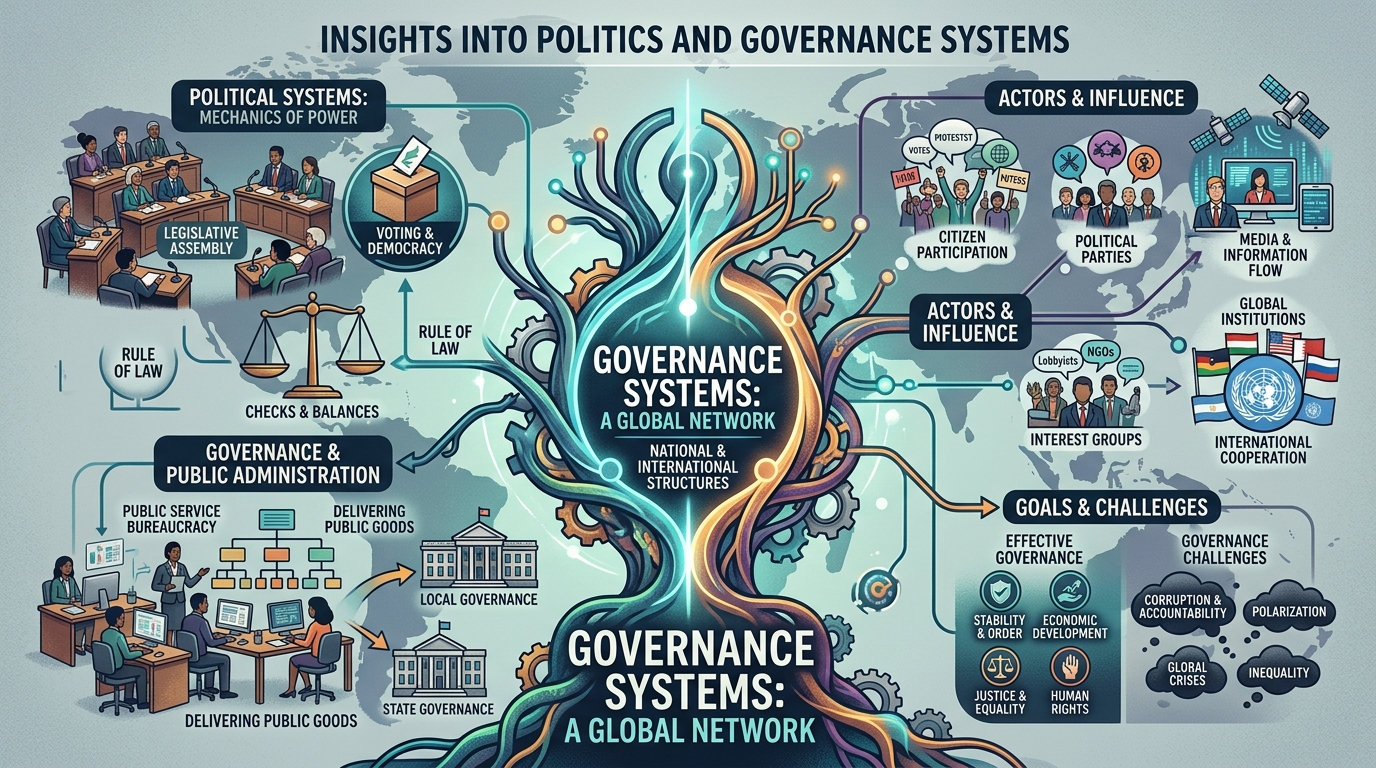
Politics and governance systems shape how societies are organized, how laws are made, and how public resources are distributed. In the modern world, governance is no longer limited to traditional institutions; it is increasingly influenced by technology, global cooperation, and citizen participation. Understanding political systems helps explain how decisions are made at local, national, and international levels, and how power is balanced within societies.
Foundations of Political Systems
Democratic Governance Principles
Democratic systems are based on principles such as free elections, rule of law, and citizen participation. These principles ensure that governments remain accountable to the people while protecting individual rights and freedoms. Democracies vary in structure but share the common goal of representing public interest through elected leadership.
Authoritarian System Structures
Authoritarian systems concentrate power in a single leader or a small group, limiting political competition and public participation. These systems often prioritize stability and control over individual freedoms. Decision-making is typically centralized, allowing for faster implementation of policies but reducing transparency and accountability.
Federal Governance Models
Federal systems divide power between central and regional governments, allowing local authorities to manage specific responsibilities. This structure helps accommodate diverse populations and regional differences while maintaining national unity. Countries use federalism to balance authority and improve administrative efficiency.
Parliamentary System Functions
Parliamentary systems separate the head of state from the head of government, with the executive branch depending on legislative support. Governments are formed based on parliamentary majority, ensuring closer coordination between law-making and administration. This system allows for flexible leadership changes through votes of confidence.
Presidential System Dynamics
In presidential systems, the president serves as both head of state and government, with fixed terms and separate executive authority. This structure creates clear separation of powers between branches of government, reducing dependency on legislative approval while maintaining checks and balances.
Governance and Public Administration
Policy Making Process
Policy making involves identifying public issues, drafting solutions, and implementing government actions. It requires collaboration between political leaders, bureaucrats, and stakeholders. Effective policy making ensures that social, economic, and environmental challenges are addressed through structured decision-making processes.
Bureaucratic Administration Role
Bureaucracies are responsible for executing government policies and managing public services. They ensure continuity, efficiency, and stability within governance systems. Bureaucratic institutions play a key role in implementing laws and maintaining administrative order across different levels of government.
Public Service Delivery Systems
Public service delivery focuses on providing essential services such as healthcare, education, and infrastructure. Efficient systems ensure accessibility, quality, and fairness for all citizens. Governments continuously improve service delivery through reforms and digital transformation initiatives.
Legal Framework Implementation
Legal frameworks define how laws are created, interpreted, and enforced within a country. They provide structure for governance and ensure justice and accountability. Strong legal systems support political stability and protect citizens’ rights through consistent application of rules.
Administrative Transparency Measures
Transparency in governance ensures that government actions are open to public scrutiny. It reduces corruption, builds trust, and improves accountability. Transparency measures include open data policies, audits, and citizen reporting systems that strengthen democratic governance.
Political Participation and Civic Engagement
Electoral Participation Systems
Electoral systems determine how votes are cast and counted in democratic processes. They influence representation, political competition, and government formation. Fair and transparent elections are essential for maintaining public trust in governance systems.
Civic Awareness Development
Civic awareness encourages citizens to understand their rights and responsibilities within a political system. Educated citizens are more likely to participate in governance and hold leaders accountable. Awareness programs strengthen democracy and improve political engagement.
Political Party Structures
Political parties organize individuals with shared ideologies to contest elections and form governments. They play a key role in shaping policies, representing public interests, and providing choices to voters in democratic systems.
Public Consultation Mechanisms
Public consultation allows citizens to contribute to policy decisions through surveys, hearings, and forums. This participatory approach improves decision quality and ensures that government actions reflect public needs and expectations.
Grassroots Political Movements
Grassroots movements emerge from community-level activism focused on social and political change. These movements influence policy reforms by mobilizing citizens around shared concerns such as equality, justice, and environmental protection.
Global Governance and International Relations
International Cooperation Frameworks
International cooperation frameworks bring countries together to address global issues such as climate change, trade, and security. Organizations facilitate dialogue and coordination to promote peace and stability across nations.
Diplomatic Relations Systems
Diplomatic systems manage relationships between countries through negotiations, treaties, and embassies. Diplomacy helps resolve conflicts peacefully and strengthens economic and cultural ties between nations.
Global Policy Coordination
Global policy coordination ensures that countries align strategies on issues like health, environment, and trade. This cooperation is essential for managing challenges that cross national borders and require collective action.
Supranational Organizations Role
Supranational organizations operate above national governments to regulate international affairs. They influence policies, enforce agreements, and promote cooperation among member states for shared goals.
Conflict Resolution Mechanisms
Conflict resolution systems aim to peacefully address disputes between countries or groups through negotiation, mediation, and arbitration. These mechanisms help prevent escalation and maintain global stability.
Technology in Governance Systems
Digital Government Services
Digital government services allow citizens to access public services online, improving efficiency and transparency. These systems reduce paperwork, increase accessibility, and enhance communication between governments and citizens.
Data Driven Policy Making
Data-driven governance uses analytics and digital information to design effective policies. Governments rely on data to understand trends, allocate resources, and improve decision-making accuracy.
E Voting Systems Growth
E-voting systems enable citizens to cast votes electronically, improving convenience and participation. These systems require strong cybersecurity measures to ensure fairness and prevent manipulation.
Artificial Intelligence Governance
AI is increasingly used in governance to automate services, detect fraud, and improve policy analysis. However, it also raises ethical concerns about privacy, bias, and accountability.
Cybersecurity in Government
Cybersecurity protects government systems from digital threats and attacks. Strong security frameworks ensure data integrity, national security, and public trust in digital governance systems.
Challenges in Modern Governance
Corruption and Accountability Issues
Corruption undermines trust in government institutions and reduces efficiency in public service delivery. Strong accountability systems are needed to ensure transparency and ethical governance.
Economic Inequality Impacts
Economic inequality affects political stability and social cohesion. Governments must design policies that promote fair resource distribution and reduce disparities among populations.
Political Polarization Trends
Political polarization divides societies into opposing ideological groups, making consensus and cooperation more difficult. This trend challenges democratic decision-making and governance effectiveness.
Governance Efficiency Problems
Inefficient governance systems lead to delays, poor service delivery, and resource mismanagement. Administrative reforms and technology integration help improve efficiency and responsiveness.
Human Rights Protection Challenges
Protecting human rights remains a key challenge in many governance systems. Governments must balance security, development, and individual freedoms to ensure justice and equality.
What is a governance system?
A governance system is the structure through which governments make and implement decisions for society.
How does democracy work?
Democracy works by allowing citizens to elect representatives who make laws and govern on their behalf.
Why is political participation important?
Political participation ensures citizens influence decisions and hold leaders accountable.
What is global governance?
Global governance refers to cooperation between countries to manage international issues.
How does technology improve governance?
Technology improves governance by increasing transparency, efficiency, and public access to services.
Conclusion
Politics and governance systems form the backbone of how societies function and evolve over time. From democratic participation to global cooperation and digital transformation, modern governance is becoming more connected and data driven. As challenges grow more complex, effective political systems must focus on transparency, inclusivity, and innovation to ensure stability, fairness, and sustainable development for future generations.
