


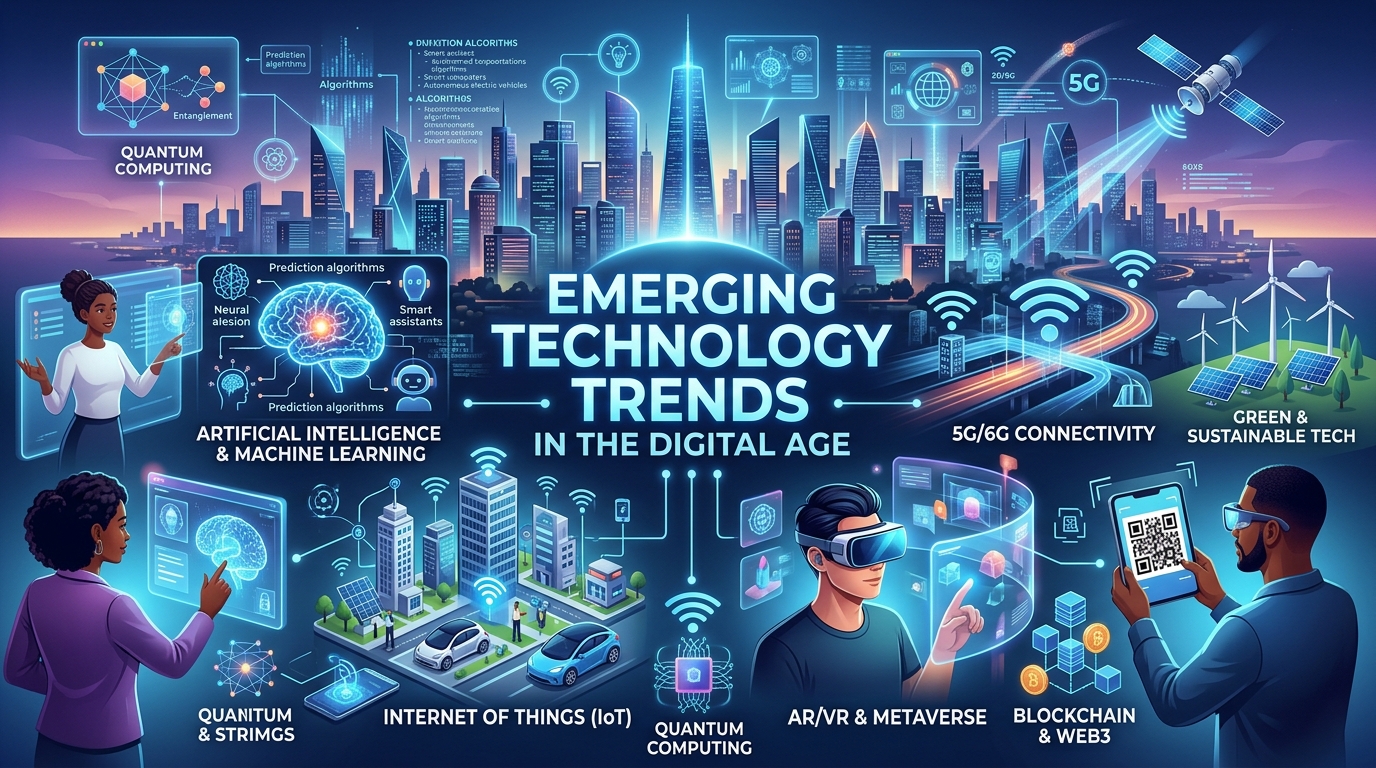
Emerging technology trends are reshaping the digital age by transforming how people communicate, work, learn, and solve complex global problems. From intelligent automation to immersive virtual environments, innovation is accelerating faster than ever. These technologies are not only improving efficiency but also creating entirely new industries, redefining human experiences, and driving the next phase of global digital evolution.
Artificial Intelligence Evolution
Generative AI Expansion
Generative AI systems are creating text, images, videos, and code with human-like quality, transforming industries such as marketing, education, and software development. These tools improve productivity, reduce creative workload, and enable rapid content generation, making digital processes more efficient and innovative across global sectors.
Machine Learning Integration
Machine learning is becoming deeply integrated into everyday applications, enabling systems to learn from data and improve performance over time. Businesses use it for forecasting, personalization, and automation, while industries like healthcare and finance rely on it for accurate decision-making and predictive insights.
Natural Language Understanding
Natural language understanding allows machines to interpret human communication more effectively, improving chatbots, translation tools, and virtual assistants. This technology enhances user interaction by enabling more natural conversations between humans and machines, making digital systems more accessible and intelligent.
AI Driven Automation
AI-driven automation is replacing repetitive manual tasks across industries, increasing efficiency and reducing operational costs. From manufacturing to customer service, automated systems streamline workflows, allowing humans to focus on creative and strategic work while improving overall productivity.
Ethical AI Development
Ethical AI development focuses on fairness, transparency, and accountability in artificial intelligence systems. Developers aim to reduce bias, protect privacy, and ensure responsible use of AI technologies while maintaining trust between users and digital platforms.
Cloud and Edge Computing Growth
Cloud Scalability Solutions
Cloud computing provides scalable infrastructure that allows businesses to expand or reduce resources based on demand. This flexibility reduces costs, improves performance, and supports global collaboration by enabling access to data and applications from anywhere in the world.
Edge Computing Systems
Edge computing processes data closer to its source rather than relying solely on centralized servers. This reduces latency, improves speed, and enhances real-time decision-making for applications like autonomous vehicles, smart cities, and industrial automation systems.
Hybrid Cloud Architecture
Hybrid cloud combines public and private cloud systems to offer greater flexibility and security. Organizations use this approach to balance sensitive data protection with scalable computing power, optimizing performance and operational efficiency across digital infrastructures.
Cloud Native Applications
Cloud-native applications are built specifically for cloud environments, allowing faster deployment, easier scaling, and better resilience. These applications support modern digital services and help businesses innovate quickly in competitive technology-driven markets.
Distributed Computing Networks
Distributed computing networks connect multiple systems to work together on complex tasks. This approach improves processing power, enhances reliability, and supports large-scale applications such as scientific research, data analytics, and global digital platforms.
| Technology Type | Key Function | Impact Area |
|---|---|---|
| AI Systems | Intelligent decision-making | Automation & analytics |
| Cloud Computing | Data storage & access | Business scalability |
| Edge Computing | Real-time processing | Smart devices |
| Blockchain | Secure transactions | Digital trust systems |
Internet of Things Expansion
Smart Home Ecosystems
Smart home ecosystems connect devices like lighting, security systems, and appliances to the internet for automation and remote control. These systems improve convenience, energy efficiency, and security while offering personalized living experiences.
Industrial IoT Solutions
Industrial IoT connects machines and sensors in factories to improve productivity, reduce downtime, and enhance predictive maintenance. This technology helps industries operate more efficiently through real-time monitoring and data-driven decision-making.
Wearable Technology Growth
Wearable devices such as smartwatches and health trackers monitor physical activity, heart rate, and sleep patterns. These tools support healthier lifestyles and provide valuable health insights for users and medical professionals.
Connected Transportation Systems
IoT-enabled transportation systems improve traffic management, vehicle tracking, and route optimization. These technologies enhance safety, reduce congestion, and support smart city development through real-time data integration.
IoT Data Analytics
IoT data analytics processes large volumes of data collected from connected devices to generate actionable insights. Businesses use this information to improve operations, enhance customer experience, and optimize resource management.
Blockchain and Digital Trust Systems
Decentralized Finance Growth
Decentralized finance platforms enable financial transactions without traditional intermediaries, offering faster, cheaper, and more transparent services. This system is reshaping global banking and investment models.
Smart Contract Innovation
Smart contracts automatically execute agreements when conditions are met, reducing the need for manual intervention. They improve efficiency, transparency, and trust in digital transactions across industries.
Digital Identity Systems
Blockchain-based digital identity systems provide secure and verifiable online identification. These systems reduce fraud, enhance privacy, and improve access to digital services worldwide.
Cryptocurrency Ecosystem
Cryptocurrencies operate on decentralized networks, enabling secure peer-to-peer transactions. They continue to influence global financial systems and investment strategies while evolving through regulation and innovation.
Blockchain Security Models
Blockchain security models ensure data integrity through encryption and distributed verification. This makes systems resistant to tampering and cyberattacks, strengthening trust in digital ecosystems.
5G and Next Generation Connectivity
Ultra Low Latency Networks
5G networks provide extremely low latency, enabling near-instant communication between devices. This is critical for applications like remote surgery, gaming, and autonomous systems.
High Speed Data Transmission
5G technology enables significantly faster data transfer speeds, improving streaming quality, downloads, and real-time digital interactions across devices and platforms.
Smart City Infrastructure
5G supports smart city development by connecting sensors, traffic systems, and public services. This improves urban efficiency, safety, and resource management.
Enhanced Mobile Experiences
Mobile users benefit from smoother streaming, faster browsing, and improved app performance due to advanced 5G connectivity and network capacity.
Internet Everywhere Access
5G expansion ensures widespread internet access, enabling digital inclusion and supporting remote work, education, and global communication systems.
Immersive Digital Technologies
Virtual Reality Applications
Virtual reality creates fully immersive digital environments used in gaming, training, education, and healthcare. It enhances user engagement through interactive experiences.
Augmented Reality Integration
Augmented reality overlays digital information onto the real world, improving navigation, retail experiences, and educational tools through interactive visuals.
Mixed Reality Systems
Mixed reality combines virtual and physical environments, allowing users to interact with digital objects in real-world settings for advanced applications.
Metaverse Development
The metaverse is a shared digital universe where users interact through avatars, enabling social, economic, and entertainment experiences in virtual spaces.
Digital Simulation Technology
Digital simulations replicate real-world systems for testing, training, and analysis, improving decision-making and reducing risks in industries like aviation and engineering.
Cybersecurity and Digital Protection
Advanced Threat Detection
AI-powered threat detection systems identify cyberattacks in real time, improving response speed and protecting sensitive data from breaches.
Zero Trust Security Models
Zero trust models verify every user and device before granting access, reducing vulnerabilities and strengthening organizational cybersecurity frameworks.
Data Encryption Techniques
Encryption protects sensitive information by converting it into secure codes, ensuring privacy and preventing unauthorized access across digital systems.
Identity Access Management
Identity management systems control user access to digital resources, improving security and reducing the risk of unauthorized data exposure.
Cloud Security Innovations
Cloud security solutions protect data stored in cloud environments through monitoring, encryption, and automated threat response mechanisms.
What are emerging technology trends?
Emerging technology trends are new innovations shaping the future of digital systems and industries.
Why is AI important in technology trends?
AI improves automation, decision-making, and efficiency across multiple digital platforms.
How does 5G change connectivity?
5G enables faster internet speeds, lower latency, and improved digital communication systems.
What is the role of IoT in modern technology?
IoT connects devices and systems to improve automation and data sharing.
What is the future of digital technology?
The future includes AI, blockchain, immersive technologies, and advanced connectivity systems.
Conclusion
Emerging technology trends are driving a powerful digital transformation across industries by combining intelligence, connectivity, and immersive experiences. Innovations like AI, blockchain, IoT, and 5G are reshaping how societies operate and interact. As these technologies continue to evolve, they will define the future of digital life, making systems more efficient, secure, and globally interconnected for the next generation.
